FROM THE STAGE: THE JOY PARADOX. KATIE MCCORMICK ON WHY AI MAKES WORK BETTER AND HARDER AT THE SAME TIME
The joy paradox is the finding that the same AI tools make work both more satisfying and more draining for the same people at the same time. Katie McCormick brought it to CultureCon 2026 along with an argument about what has to be true in a culture before any of it helps.

Key takeaways
Only about one in five people are actively engaged at work. McCormick's room of culture professionals was a statistical outlier, and she said so.
The joy paradox is the story of AI at work right now. Most regular AI users say it made their work more satisfying. A large share of those same people report new mental strain.
Half of regular AI users say they now spend more time managing AI tools than doing their actual work.
Culture is the precondition, not the payoff. Bonusly's thesis is that AI tools only become skill accelerants where recognition and acceptance already exist.
Recognition fails on specificity, not sentiment. “Thanks for your help” is the default, and it does nothing. Naming the behavior and its impact is the whole job.
The best moment of the session was analog. They ended by asking people to handwrite a postcard, and offered to mail it.
Katie McCormick opened with a show of hands, and then immediately raised the bar.
How many people here feel good about work? A lot of hands went up, more than she expected. Then the follow-up:
“How many people feel actually good about work? Like, jump out of your seat, I'm excited to go to work.”
Fewer hands. She wanted to know where those people worked so everyone could apply there in the morning, then acknowledged the obvious risk in a room like that one: your boss might be sitting next to you.
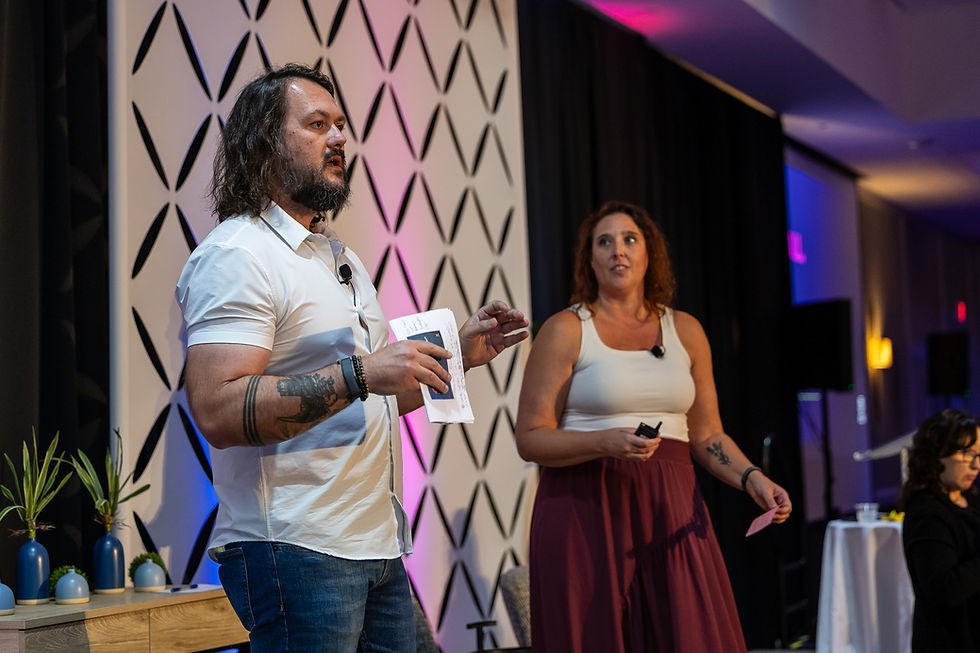
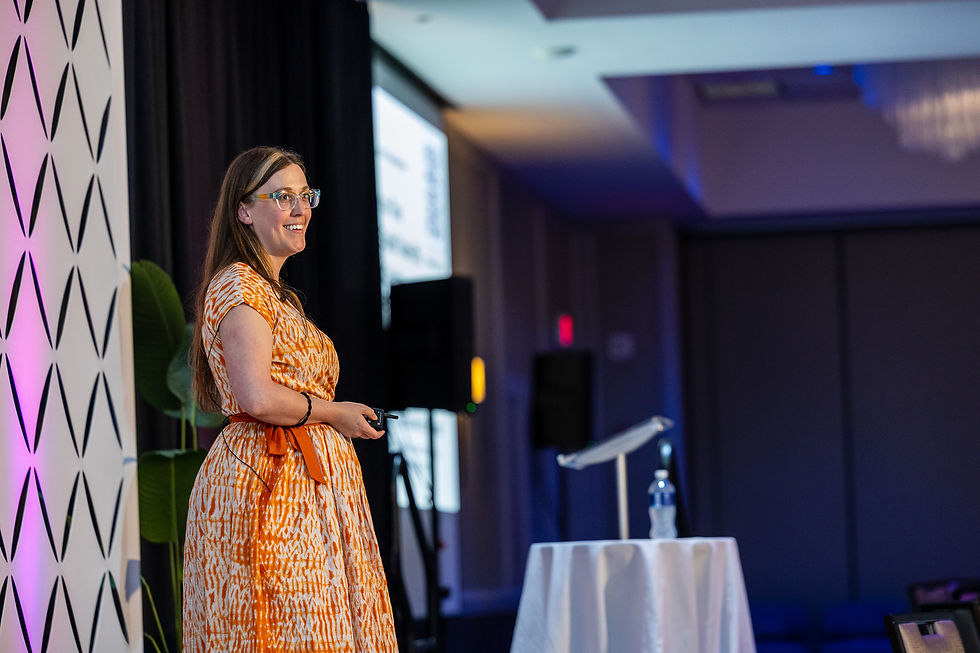
McCormick works in product at Bonusly, a peer-to-peer recognition and rewards platform. She was the first of three presenters in CultureCon 2026's Innovation Showcase, ten minutes each, no Q&A.
One in five
The number she anchored on: the latest Gallup data she cited puts roughly 80 percent of people as either disengaged or actively unhappy at work. Only one in five is actively engaged.
Her way of making that land was the flight she had taken that morning from Seattle.
“If four out of five people on the flight crew are actively disengaged at work, I might need to think about road tripping back.”
The joy paradox
Then she brought research from BCG that reframes the engagement question for anyone rolling out AI.
Two thirds of employees who use AI regularly say it has made their work more satisfying. Forty-one percent of those same people say it has added real mental strain. And half of them say they now spend more time managing AI tools than doing their actual work.
Same people. Same tools. Both true.
“You have this paradox, this conundrum, where AI is making work both better and harder for the same people at the same time.”
This is the part worth carrying out of the room whether or not you ever look at the product. If your AI rollout is producing satisfaction and strain simultaneously, that is not a sign the rollout failed. It is the expected shape of the thing, and it means the intervention that matters is cultural rather than technical.
Bonusly's stated thesis follows directly: the right cultural conditions have to be in place for AI tools to become skill accelerants rather than overhead, and those conditions are predicated on recognition and acceptance.
What she actually demoed
McCormick was explicit that she was not there to pitch the platform. She was there to show one thing: a new AI agent built into the recognition experience, which connects to the tools teams already collaborate in, including Slack, Teams, GitHub, and Linear.
Four use cases, in ascending order of interest:
Who should I even recognize? Because it can see collaboration patterns and the full recognition history, it can surface who has been working with whom. Her example was a teammate who had quietly taken ownership of the help center and pulled a large amount of work off the product team.
Proactive surfacing. Rather than waiting to be asked, it shows recent wins across the team so they stay visible.
Milestones. Asked what anniversaries were coming up, it returned a list, and she discovered she had missed a colleague's four-year work anniversary. It then pulled the recurring themes from four years of recognition he had received, which produced something more useful than a date: a story about how he had grown.
Coaching. This was the interesting one. She started a post with “hey, thanks for your help,” and got pushed back on: make it specific, show impact.
She also made a point of editing every suggestion before sending, so it sounded like her, and adding a GIF, because it is more fun.
The coaching case is the one that matters for anyone thinking about recognition programs generally. Most recognition failure is not a failure of intent. People mean it. They just write “great job,” which tells the recipient nothing about which behavior to repeat.
“I'm going to have really meaningful recognition that's highlighting the most important qualities and the behaviors that we want our employees to exhibit so that people really understand the impact of their work.”

Then she handed out postcards
The end of a ten-minute AI demo was a pen and a piece of card stock.
On every table were postcards with prompts designed to get people thinking about someone they had been meaning to recognize. Fill one out, bring it to the booth, and they would mail it, so that someone somewhere would receive a handwritten note of appreciation in the post.
Which is a fair summary of the whole argument. The tooling exists to make sure the moment gets noticed. The note still has to be worth receiving.
Frequently asked questions
What is the joy paradox?
A pattern identified in BCG research and cited in this session: employees who use AI regularly report that it makes their work more satisfying, while a substantial share of those same employees also report increased mental strain, and about half say they spend more time managing AI tools than doing their actual work. AI improves and degrades the experience of work simultaneously, for the same people.
How engaged are employees right now?
The Gallup figure cited in this session is that roughly 80 percent of people are either disengaged or actively unhappy at work, leaving about one in five actively engaged.
Why would recognition affect whether AI adoption works?
The argument made here is that AI tools amplify whatever conditions already exist. In a culture where people's contributions are seen and acknowledged, new tools get treated as help. Where they aren't, the same tools read as surveillance or as more work. Recognition and acceptance are framed as the preconditions that determine which of those happens.
What makes a piece of employee recognition actually land?
Specificity and impact. Naming the particular behavior and what it changed, rather than a general thank you. The practical test used in the session: if the message could be sent to anyone on the team without editing, it isn't recognition yet.
Who is Katie McCormick?
Katie McCormick works in product at Bonusly, a peer-to-peer recognition and rewards platform. She presented in the Innovation Showcase at CultureCon 2026 in Madison, Wisconsin.
CultureCon is becoming WorkPossible
In 2027, our tenth year, CultureCon becomes WorkPossible. We've grown out of being just a conference and we needed a name that could keep growing with our expanded services. But despite the name change, culture is still the heartbeat of our organization. That's never going to change.
WorkPossible is the belief that work can be a force for good, and that when people come together with curiosity and purpose, incredible things become possible.
Early bird tickets for WorkPossible 2027 in Madison are available now. Get yours here
Work, made possible by the people who do it.
This recap was written with the help of AI from Katie McCormick's Innovation Showcase presentation at CultureCon 2026, then reviewed by our team.

Comments