FROM THE STAGE: CORPORATE VOLUNTEERING CULTURE. CALEB CAMPBELL ON THE TRIP NOBODY STOPPED TALKING ABOUT
Updated: Sep 22
A corporate volunteering culture is built out of shared experience, not a policy or a paid day off. Caleb Campbell brought CultureCon 2026 the story of a trip his team could not stop talking about, and what giving back together changed about how they worked once they were home.
Key takeaways
Three reasons to make giving back a program: the world needs it, your people want it, and your culture benefits from it.
Four out of five employees say they feel a stronger relationship with the people around them after volunteering together.
Two to three times the engagement among people who actively volunteer through their organization compared with those who don't.
Tie the giving to your values. At Kinetik, the three core values are be just, be curious, be collaborative, and the give-back program points back at them.
The love of giving back crosses every line of geography, religion, and org size he's worked across.
Shared memory is the real return. Years later, a team still talks about the trip where everything went wrong.
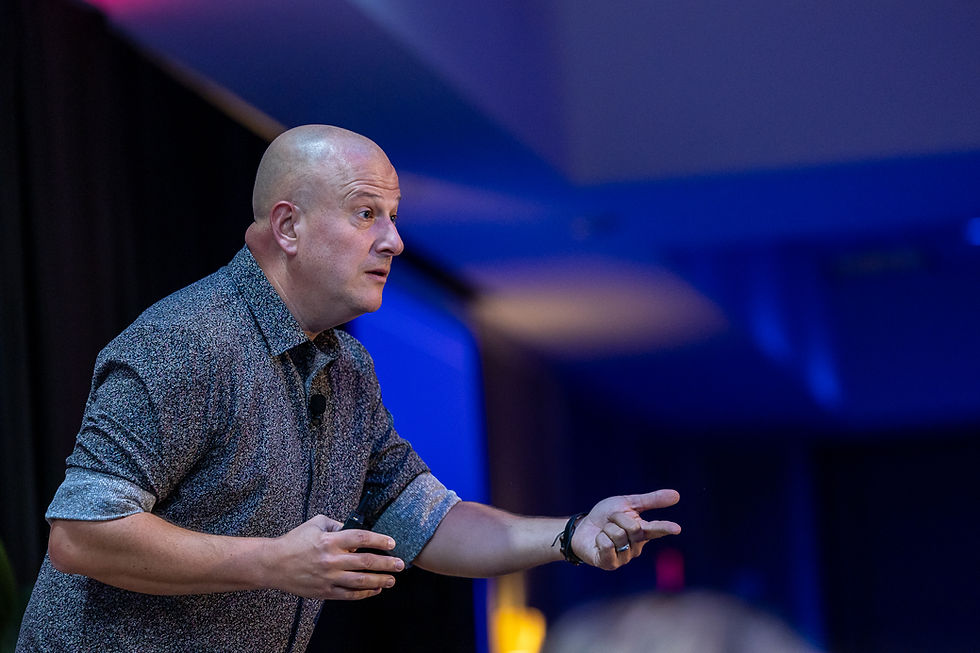
Caleb Campbell didn't start his CultureCon 2026 session by speaking. He started by rearranging the room.
Big rooms make people passive, so he asked everyone to move into the middle section and cluster at tables in fours and fives. Shrink the room. It goes better when people know each other a little bit. Introverts, he promised, wouldn't have to do much.
It was his fifth time speaking at a CultureCon event. Campbell is Chief People Officer at Kinetik, a roughly 80-person health tech company whose goal is to remove transportation as a barrier to healthcare for the country's most vulnerable people. He's also acting president of Abba's Pride, a nonprofit that feeds, teaches, and develops children in under-resourced communities of rural South Africa, and he travels several times a year to countries including Honduras, India, and South Africa.

Why this topic, out of hundreds
He was blunt about the competition for attention. There are dozens of topics at a conference like this and hundreds waiting on your desk when you get home. So why spend an hour on giving back? Three reasons, and he built the session on them.
The world needs it.
People want it.
Your culture will benefit from it.
What happened when Kinetik added one activity
Kinetik brings the whole team together once a year. About half the company is remote and they're based in Queens, so the annual gathering already had the usual shape: end-of-year party, awards, culture awards.
This year they added something. They connected with City Meals on Wheels in New York City, an organization that serves 22,000 meals a day to shut-ins, and spent about three hours running an assembly line together.
It cost them part of an afternoon. It became the thing people talked about.

Everyone gives back
Campbell's evidence that this isn't a niche preference comes from the range of places he's seen it. He put up a photo of his own team and pointed out where people were from: New York City, Massachusetts, Honduras, the Dominican Republic, Russia, India.
Before Kinetik he spent several years at a company of about 500 people founded by Jewish leaders, which was later acquired by a Catholic health system of 120,000.
“You know what all of those groups and people have in common? Love to give back.”
The trip that became a core memory
The story that anchors the session is a trip to South Africa. Six of them went to work with a youth project. Day one was the Nelson Mandela Museum in Johannesburg. Day two was a mini safari where they came around a corner to a baby elephant taking a mud bath, then around the next to three lions in the grass, close enough that somebody asked whether they should be sitting quite this close.
Then things went wrong, in the way trips do. Well enough that the team decided they were never travelling anywhere with Erica again, a joke that became a running bit for the rest of the trip. Anything else that went sideways got the same treatment: remember? Yeah, it's okay though.
“To this day, if I see any of the six of us that went on that trip, you know what we talk about? That crazy time we went to South Africa and didn't think we were going to make it alive.”
That's the argument in one anecdote:
“That's what giving back does with teams. It gives us these unique opportunities, these shared moments, these memories that build our relationships and strengthen who we are as a group, because we're going out and we're trying to do something that's bigger than ourselves.”
His instruction to the room was to fill in the blank with the cause you care about. The mechanism works regardless of which cause it is.
The numbers behind the feeling
Campbell moved fast through the data because he wanted to get to the interactive part, but two figures carried the case.
Four out of five employees report a stronger relationship with the people around them because they did something together.
Two to three times the engagement among those who actively volunteer as part of their organization versus those who don't.
Start where your values already are
The practical half of the session was a countdown of ten keys to building a give-back program, and he made the room count them down with him rather than reading a list at them.
The first one sets up all the others: tie your giving programs to your values. At Kinetik the three core values are be just, be curious, and be collaborative, and every give-back event points back at them. Values you already have are the cheapest possible starting point, because you don't have to sell anyone on them twice.
Then he actually gave money away
True to the session promise, the middle turned into a game show. Campbell ran a version of The Price Is Right built on percentages: four questions about leaders and giving back, each with a percentage answer, closest without going over. Virtual attendees played along in the chat.
The prize wasn't a prize. Winners directed a couple hundred dollars each to the charity of their choice, and Campbell put his own card behind it. One of the beneficiaries he named is an organization serving foster and kinship foster youth in lower Manhattan, where he sits on the board.
A session about giving back that gives money away in the middle of itself is a better argument than any slide.
Ideas you can steal
He closed by asking the room for their own favourites, then offered his.
A give auction tied to the annual retreat. First year they auctioned around 50 items and it turned into, in his words, rich executives outbidding rich executives. So the next year they capped it at 20 or 30 items before telling people what they are.
A silent-auction variant where anybody can buy a $5 ticket and drop it in a bucket for the item they want, and all of it goes to charity.
A remote give-back week, where wherever you are, you find something. His team gave blood, picked up trash, cleaned up a green space, served at an orphanage, and one former teacher went back and taught at a school.
The point of the last one is the design principle underneath all of it: give people the freedom to pick, and they'll infuse what they care about into it.
Frequently asked questions
Who is Caleb Campbell?
Caleb Campbell is Chief People Officer at Kinetik, a health tech company working to remove transportation as a barrier to healthcare, and acting president of Abba's Pride, a nonprofit that feeds, teaches, and develops children in under-resourced communities of rural South Africa. He has spent 25 years helping mission-minded organizations do their most impactful work and has spoken at CultureCon five times.
Does corporate volunteering actually affect engagement?
According to the figures Campbell presented, yes. Four out of five employees report stronger relationships with colleagues after volunteering together, and people who actively volunteer through their organization show two to three times the engagement of those who don't.
How do you start a give-back program with a small budget?
Start with what you already have. Tie the program to your existing company values, then choose formats that scale down: a remote give-back week where people find their own local activity costs nothing, and a silent auction with $5 tickets raises money without requiring a budget.
What makes a volunteer activity actually build culture?
Doing it together, and doing something bigger than the organization itself. Campbell's argument is that shared experience creates shared memory, which is what strengthens a team. His own example is a South Africa trip his team still talks about years later.
Should employees choose the cause?
Campbell favours it. His remote give-back week let people pick their own activity, and his view is that giving people the freedom to choose lets them infuse what they personally care about into the program.
CultureCon is becoming WorkPossible
In 2027, our tenth year, CultureCon becomes WorkPossible. We've grown out of being just a conference and we needed a name that could keep growing with our expanded services. But despite the name change, culture is still the heartbeat of our organization. That's never going to change.
WorkPossible is the belief that work can be a force for good, and that when people come together with curiosity and purpose, incredible things become possible.
Early bird tickets for WorkPossible 2027 in Madison are available now. Get yours here
Work, made possible by the people who do it.
This recap was written with the help of AI from Caleb Campbell's session at CultureCon 2026, then reviewed by our team.


Comments